
Introduction
Many homeowners only start thinking about tree safety when something looks “not quite right”—a crack in the trunk, a large dead branch, or a tree leaning more than it used to. Some home owners are concerned about their neighbours tree. Understanding tree risk isn’t just about spotting dramatic signs of failure. It’s about recognising how trees behave, how they respond to stress, and what your responsibilities are as a tree owner.
If you’ve ever wondered “Is my /my neighbours tree dangerous?”, you’re not alone. Thousands of people search for answers every month, often after storms, high winds, or visible changes in their trees. This guide explains what tree risk really means, how it’s assessed, and what the law expects from you as a responsible tree owner.
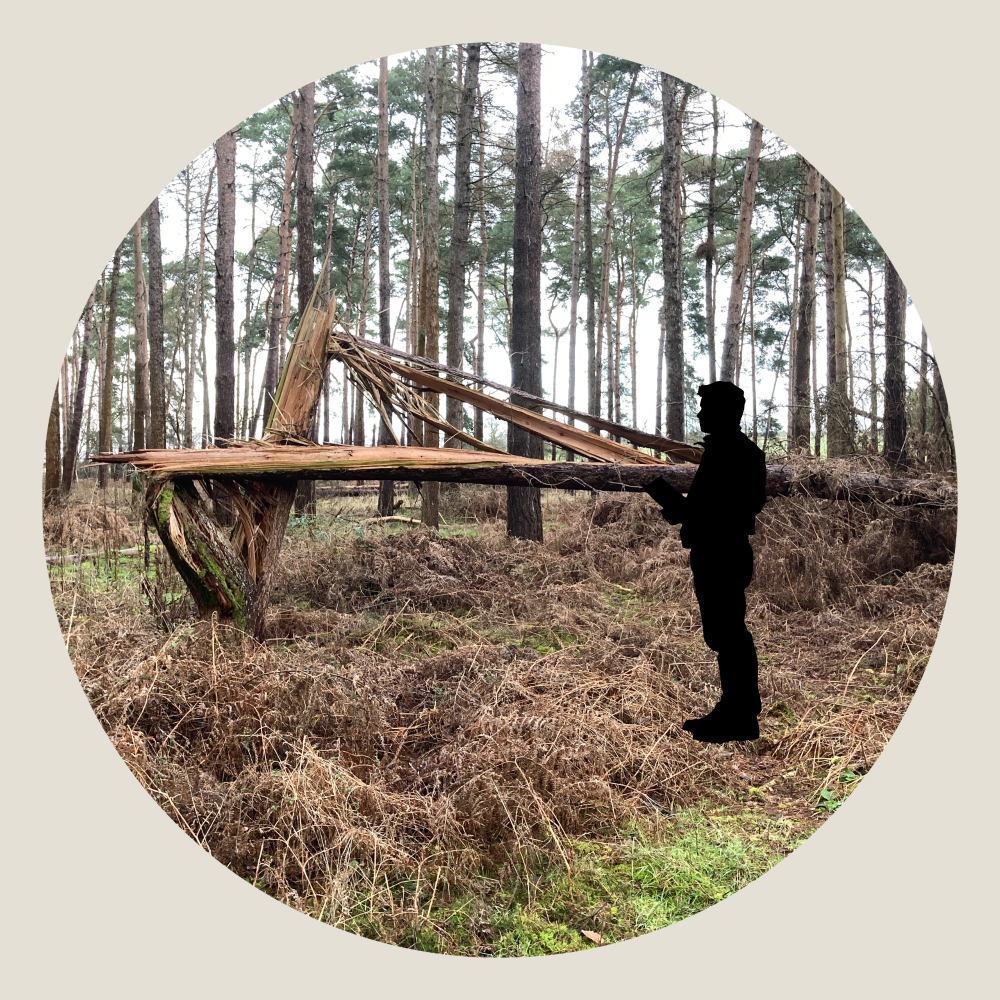
Is it a legal requirement to have a tree survey?
Tree owners in the UK—whether private homeowners, landlords, or businesses—have a legal duty of care to ensure their trees are not dangerous; that means that they do not pose an unreasonable risk to people or property. This duty is shaped by several key principles:
- Occupiers’ Liability Acts (1957 & 1984) — You must take reasonable steps to ensure visitors and even trespassers are not exposed to foreseeable harm from your trees.
- Common Law Negligence — If a tree fails and causes damage, you may be liable if you should have known the tree was unsafe.
- As low as reasonably practical — All trees come with risk, even if they are managed correctly but you are expected to keep the risk as low as reasonable practical, so not every problem needs actioning.
In practice, this means arranging periodic inspections by a qualified arboricultural consultant and acting on any recommended work. A simple, proportionate system—such as a walk‑over inspection every 1–3 years—can demonstrate that you’ve met your duty of care.
When you proactively have your trees surveyed by a qualified professional, you are asking someone who knows what they are looking for to identify features that make your tree more dangerous and may require intervention before the tree becomes a health and safety concern.
If you have spotted something of concern in your tree, you want to start an inspection regime on your trees or just looking for someone in your local area who can carry out these inspection for a more detailed chat you can in contact with me using the enquire here form located at the top of the page.
What does a tree survey involve?
Tree risk is the combined likelihood that a tree (or part of it) will fail and the severity of the consequences if it does. Importantly:
- All trees carry some level of risk—they are living, dynamic organisms.
- Tree are generally low risk, but often it is the perception of the risk that is the driver of decisions.
- Risk is rarely about removing the tree, but about understanding it and managing it proportionately.
Tree risk assessment focuses on three core elements:
- Likelihood of failure — defects, decay, deadwood, structural weaknesses.
- Target — what could be hit if the tree or branch fails (e.g., a house, car, footpath).
- Consequence — influenced by species, age, defects, weather exposure, and site conditions.
The final element is the services that they provide to us. Trees have an enormous amount of positives that they provide and sometimes managing trees is about managing the risk against the positives. I have a pots coming up about the positives of trees so keep an eye out for that.
How much should a tree survey cost?
Tree survey costs vary depending on the type of survey, the number of trees, and the level of detail required, but most homeowners can expect a clear, predictable price range. For a typical residential property, a basic tree safety surveyusually starts from £150–£250 for a single tree, with additional trees often charged at a reduced rate. More detailed surveys—such as mortgage reports, planning and development surveys, or decay detection assessments—can range from £300 to £900+, depending on complexity and equipment needed.
What is important to realise is that while a tree survey may come with a cost, that value could be minimal when compared against damages, insurance costs or carrying out unnecessary tree work which could reduce the benefits that the trees provide.
What can you do if you think your neighbours tree is dangerous?
If you’re worried about a neighbour’s tree, you’re in a tricky but common situation. Trees don’t respect boundaries, but the law does—and so should your approach. The key is to stay calm, stay factual, and follow a clear process that protects both your safety and your relationship with your neighbour.
Try these steps in this order.
- Start With a Friendly Conversation with your Neighbour
- Document What You See
- Encourage a Professional Tree Inspection
- Know Your Legal Position
- In some cases you can complain to the Council
It can be challenging discussing tree risk with your neighbour whether you are on good terms or not. I have an upcoming post, expanding on the above process which can help ease the process. It is important that the relationship does not break down between you and your neighbour as this is when an agreeable outcome can be hard to find.
If you need someone to help guide you through the best way to approach this topic or you want a qualified professional to help your neighbour understand their responsibilities and obligations, please feel free to get in contact by the enquiry form at the top of the page to discuss how the best solution can be found.
Conclusion
Understanding tree risk isn’t about fear—it’s about informed, responsible management. Most trees, even those with defects, can be retained safely with the right care. As a tree owner, your legal duty is simply to take reasonable steps to ensure your trees are inspected and maintained appropriately.
If you’re unsure whether your tree is dangerous, a professional assessment can give you clarity, peace of mind, and a clear plan for managing any risks. You can enquire for more information and a no strings attached conversation here.