
Trees are one of the most important and visible assets in our towns and neighbourhoods. They shape the character of streets, soften the built environment, and provide a connection to nature in everyday life. Mature trees in particular are irreplaceable in the short term – it can take decades for newly planted to deliver the same level of benefit. Managing existing trees correctly is therefore one of the most effective ways to maintain and improve the quality of our environment.
Trees in urban environments are often located on private land but contribute to the wider public benefit. The management of the urban forest is therefore a shared responsibility between landowners, communities, and local authorities. By making informed and responsible decisions, individuals can help protect and enhance the urban forest for current and future generations.
The Balance of Managing Trees in the Urban Environment
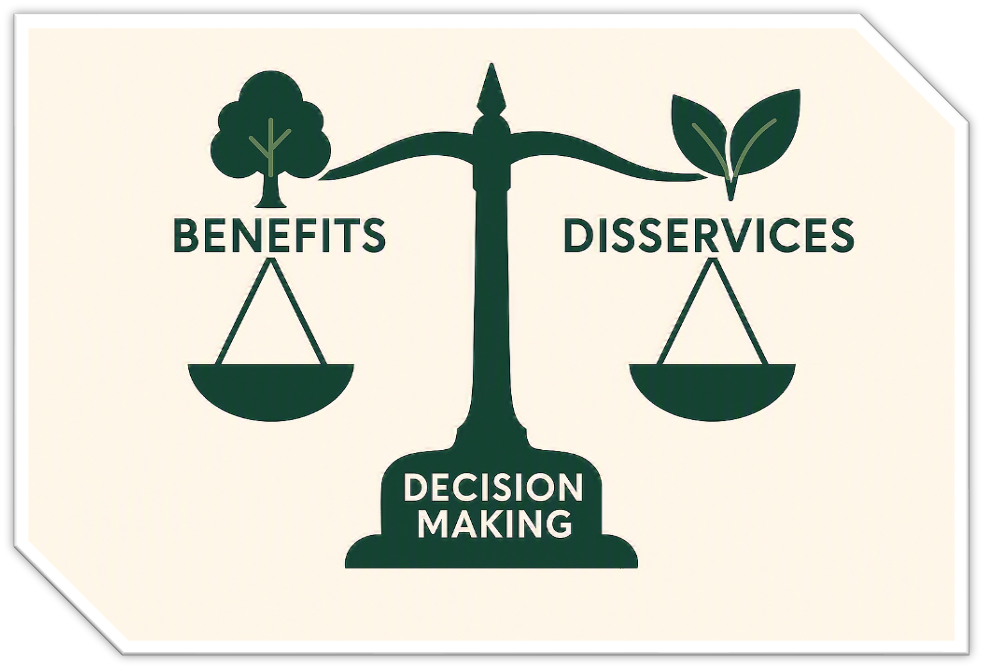
Trees provide a wide range of benefits, but they can also present challenges that need to be carefully managed. On the positive side, trees improve air quality, provide shade and cooling, support wildlife, reduce flood risk, and enhance the appearance and value of urban areas. They also contribute significantly to people’s health and wellbeing by creating more pleasant and relaxing environments. However, trees can sometimes give rise to concerns, such as shading, leaf fall, blocked gutters, or perceived risks from falling branches or the tree itself. In certain situations, roots can interact with built structures or underground services. These disservices are usually site-specific and, in many cases, can be managed through proportionate and well-informed tree care rather than removal. Recognising both the benefits and potential issues allows for balanced decision-making that ensures trees continue to provide long-term value while addressing legitimate concerns.
Making Balanced and Informed Tree Management Decisions
Good tree management is about balancing the benefits trees provide with the need to manage risk and disservices. Not all issues require significant pruning or removal. In many cases, minor or targeted works can address concerns while allowing the tree to continue delivering its benefits. Decisions should be informed, proportionate, and based on the condition of the tree and its contribution to the surrounding area.
Avoiding Unnecessary Works
Excessive or inappropriate pruning can harm trees, reduce their lifespan, and diminish their value. Heavy cutting can also lead to poor regrowth, increased maintenance costs, and a less attractive appearance. Before carrying out works, it is important to consider whether they are necessary and whether there are alternative solutions. A well-informed approach often results in better outcomes for both the tree and the property owner.
The Importance of Long-Term Management
Trees are a long-term investment. Proper management considers not just immediate concerns, but how a tree will grow and function in the future. Early intervention, such as formative pruning of young trees, can reduce the need for more significant work later on. Similarly, retaining mature trees wherever possible helps maintain continuity in the local landscape.
Working with Trees, Not Against Them
Trees are living organisms that respond to their environment. Good management works with natural processes rather than trying to control them excessively. This includes selecting appropriate species for planting, allowing adequate space for growth, and carrying out works in line with best practice. Respecting the natural form and function of trees generally leads to healthier, more sustainable outcomes.
The Role of Professional Advice
Qualified arboricultural professionals can provide valuable guidance on tree condition, risk, and appropriate management options. Seeking professional advice can help avoid unnecessary work, ensure safety, and support better decision-making. This is particularly important when dealing with large, old, or protected trees. If you need help with understanding the best way to maintain the trees you are responsible for, get in touch through the enquiry page.
Managing Trees to get the Best out of them
Trees are a vital part of our urban environment, providing significant benefits that extend far beyond the boundaries of individual properties. While trees can sometimes present challenges, these are often manageable through careful, proportionate, and informed management. By focusing on the benefits that your trees provide and then finding the least invasive way of removing the disservices—individuals can make better decisions that work with the trees for the long term. Good tree management is not about removing problems, but about working thoughtfully with trees to ensure they continue to enhance our communities for generations to come.
All of this information applies to all trees but in most cases, the tree owner has the final say on how the want the management of the tree to work for them. The exception to that, is when the tree is protected through TPO, conservation area or something else. In these cases, the tree has been deemed to provide significant positives to the public, enough to say that their management needs running by the Local Planning Authority to ensure that the management is right for the tree. This is when the idea of managing to enhance the positives and reducing the negatives becomes really important.
If you are concerned about the health or structural stability of your tree, or just need advice on managing your tree, you should speak with a suitably qualified arborist/consultant who will be able to advise on the most appropriate course of action. Sometimes this can reduce your concerns and save the removal of the tree… along with all of the benefits that go with it.